
Unlocking New Potential: How ARC-EX is Revolutionizing Neuro Physical Therapy in Charlotte, NC
Imagine working for months in traditional rehab — showing up, putting in the effort, doing everything right — only to be told that you have plateaued. That there is nothing more to gain. For many people recovering from a spinal cord injury, stroke, or traumatic brain injury, that moment does not feel like a clinical conclusion. It feels like a door closing.
But what if that door was never actually locked?
At Revive Neurorecovery Center, we have built our entire practice around a different belief: that the nervous system retains a remarkable capacity to rewire and adapt, often long after a traditional rehab timeline has ended. That belief is rooted in neuroplasticity, and it is what drives every decision we make about how we treat our clients in Charlotte, NC.
One of the tools helping us put that belief into practice is the ARC-EX device, a technology that is changing what recovery looks like for people with neurological conditions.
What Is ARC-EX and How Does It Work?
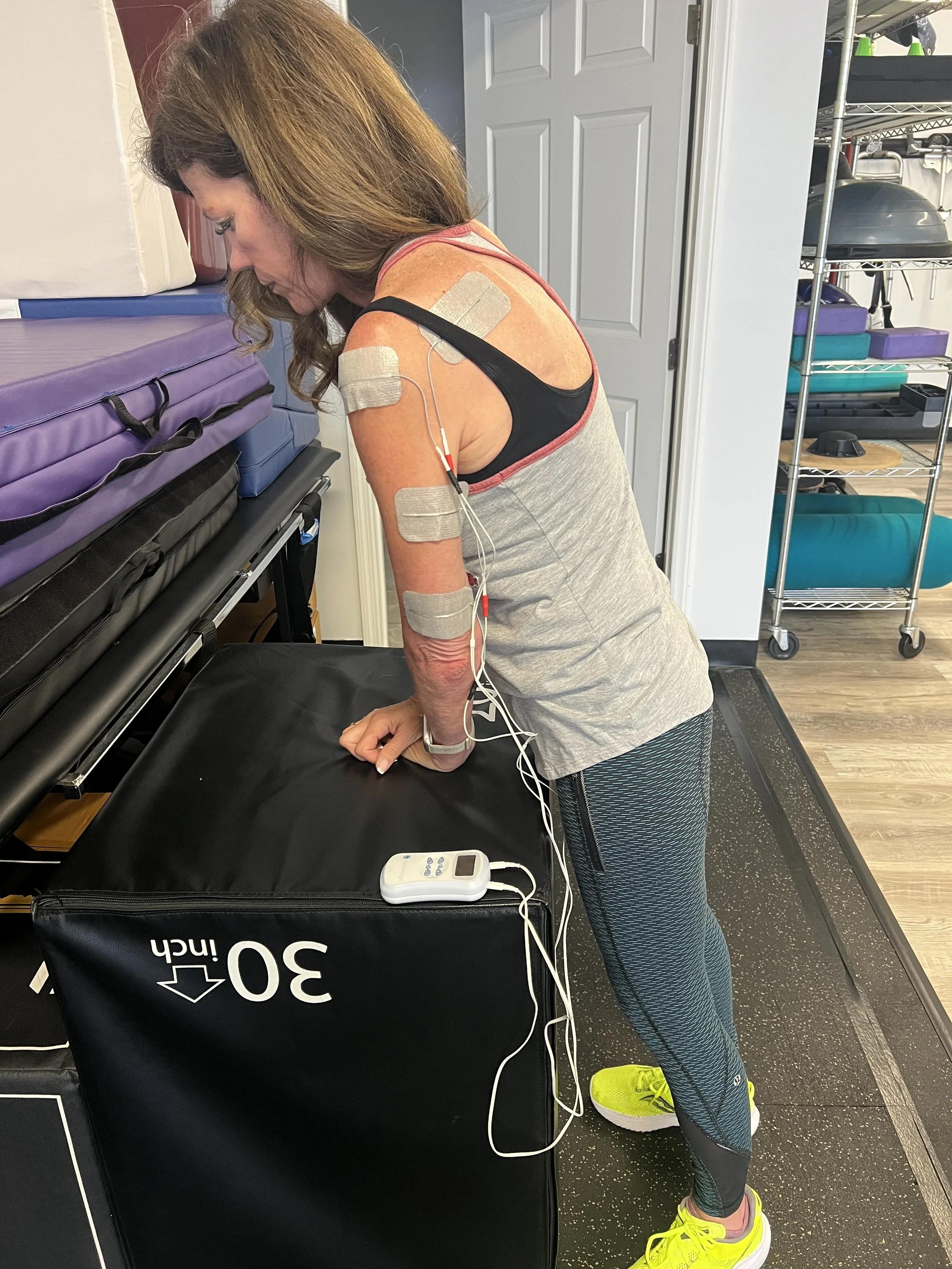
ARC-EX is anon-invasive spinal cord stimulation device designed to enhance motor function in individuals recovering from spinal cord injury and other neurological conditions. Unlike surgical implants, ARC-EX delivers targeted electrical stimulation externally to specific areas of the spinal cord.
This stimulation works by activating neural pathways that may be dormant but not destroyed. When those pathways receive consistent, targeted input — especially when paired with intensive, task-specific movement — the nervous system has a greater opportunity to reorganize and rebuild functional connections.
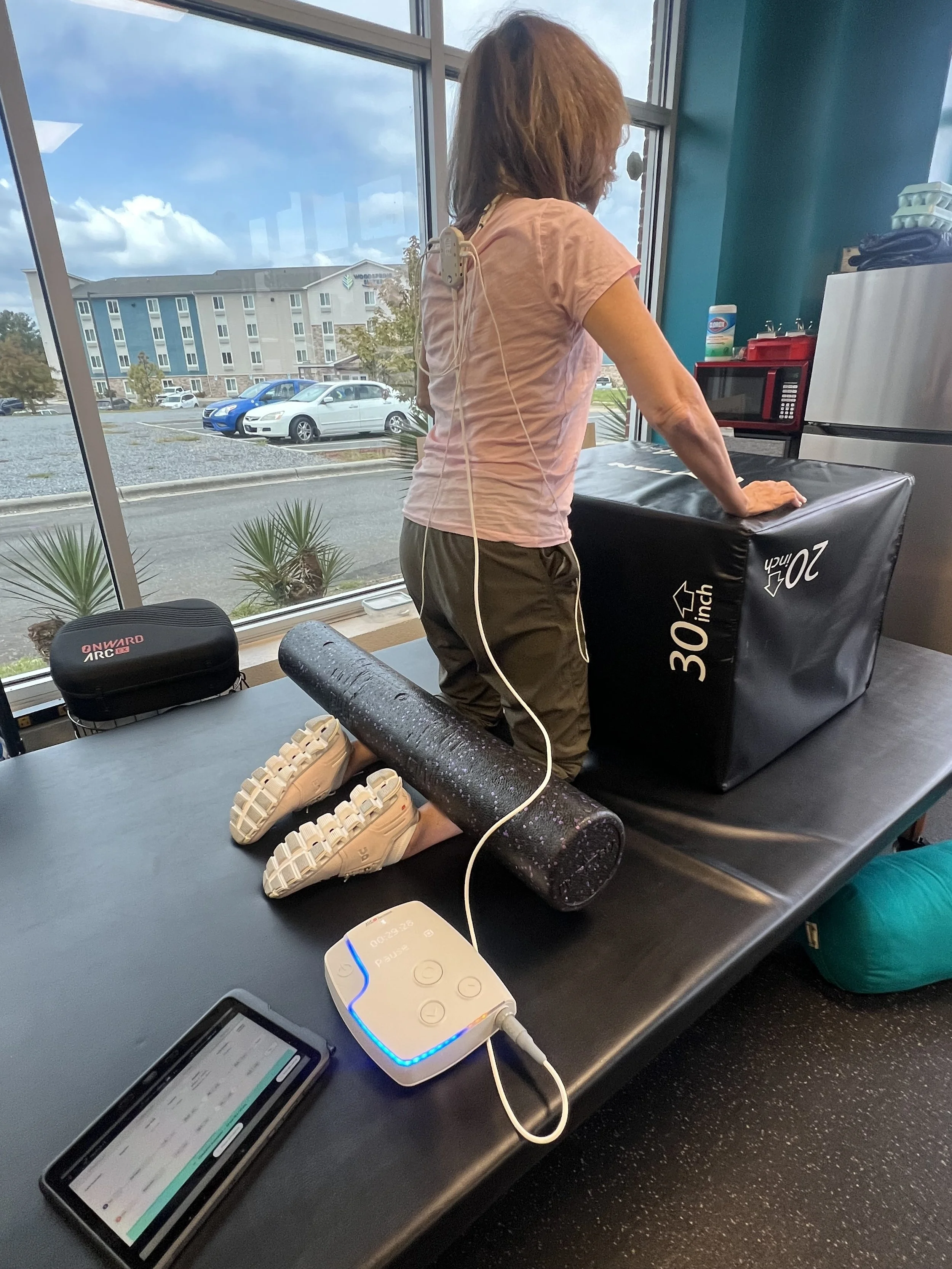
This is not a passive treatment. ARC-EX is most effective when integrated into activity-based therapy that challenges the body in weight-bearing, functional positions. That is exactly how we use it at Revive Neurorecovery Center.
The Gap Traditional Rehab Leaves Behind
Here is a reality that many neurological patients and their families know well: insurance-based physical therapy visits run out long before neurological recovery does.
Neuroplasticity does not operate on a 20-visit timeline. The nervous system's ability to adapt and form new connections is an ongoing process — one that requires repetition, intensity, and time. When traditional PT ends, many patients are left wondering how to keep making progress on their own.
This is the gap that neurological physical therapy at Revive Neurorecovery Center is designed to fill. Our model is built around long-term recovery, not short-term episode-of-care thinking. Clients work one-on-one with a Doctor of Physical Therapy in every session, with no handoffs to aides or technicians, and no arbitrary visit caps standing between them and their goals.
Who Benefits Most from ARC-EX?
Spinal Cord Injury Recovery
ARC-EX is particularly well-suited for individuals with chronic or subacute spinal cord injuries who retain some residual motor function but feel stuck in their progress. If a previous provider told you there was nothing more to gain, the combination of ARC-EX and intensive activity-based therapy may tell a different story.
For lower body recovery, ARC-EX supports improvements in strength, balance, and coordination that are foundational to standing, stepping, and walking. For upper body function, it can help reactivate the neural connections responsible for grip strength and fine motor control — abilities that directly affect a person's capacity to eat, dress, and manage daily tasks independently.
Those small gains in hand function often translate into some of the most meaningful improvements in a client's quality of life.
Stroke and TBI Recovery
While spinal cord injury is the primary clinical focus of ARC-EX, the neuroplasticity principles underlying the technology are directly relevant tostroke recoveryand traumatic brain injury rehabilitation as well. Every client at Revive Neurorecovery Center receives an individualized assessment so we can determine the right combination of approaches for their specific goals.
Depending on the client, that may include neuromuscular re-education, therapeutic exercise, electrical stimulation, dry needling, or assisted stretching — all grounded in the same science-backed commitment to helping the nervous system adapt and recover.
Parkinson's Disease Therapy
For individuals managing Parkinson's disease, the emphasis on high-intensity, activity-based movement is especially important. Research consistently supports the role of vigorous exercise in slowing disease progression and maintaining function. Our neurologic physical therapy approach incorporates strength and conditioning principles alongside targeted neuromuscular work to help clients stay active, mobile, and independent for as long as possible.
How Long Does Neurological Recovery Actually Take?
This is one of the most common questions we hear — and one of the most important to answer honestly.
Neurological recovery is not linear, and it does not have a fixed endpoint. The nervous system can continue to adapt and improve months or even years after an injury, provided it receives the right stimulus. What that means practically is that progress is still possible well beyond the window that traditional rehab typically covers.
The key factors are intensity, consistency, and specificity. High-repetition, task-specific movement performed at a challenging level gives the nervous system the input it needs to form and strengthen new connections. That is why our sessions are structured the way they are — not passive, not low-effort, but deliberately demanding in a way that drives real neurological change.
Adaptive Fitness and Life Beyond Formal Therapy
Recovery does not stop when a therapy session ends. Maintaining and building on neurological gains requires ongoing physical activity — and that can be a significant challenge for people with neurological conditions who may not feel welcome or accommodated in traditional fitness environments.
Revive Neurorecovery Center supports clients beyond the clinic through Fit With Friends CLT, Charlotte's only all-inclusive adaptive fitness class. Modeled on CrossFit-style training, this community-based program gives clients a place to keep building strength, endurance, and connection long after formal therapy concludes.
For many clients, this kind of ongoing adaptive fitness is what sustains the gains made in therapy and continues to push recovery forward.
Why Revive Neurorecovery Center in Charlotte, NC
Revive Neurorecovery Center is a specialty neurological physical therapy clinic exclusively focused on conditions like stroke, spinal cord injury, traumatic brain injury, Parkinson's disease, and Guillain-Barré syndrome. Every session is one-on-one with a Doctor of Physical Therapy, and every treatment plan is built around the individual — not a protocol.
Our approach integrates:
Neurologic physical therapy grounded in neuroplasticity science
Activity-based therapy performed in functional, weight-bearing positions
Neuromuscular re-education to rebuild motor control and coordination
Therapeutic exercise and strength and conditioning for long-term function
Electrical stimulation and dry needling as targeted adjunct treatments
Assisted stretching to support mobility and flexibility goals
ARC-EX for eligible clients pursuing spinal cord injury recovery and upper extremity function
Adaptive fitness through Fit With Friends CLT for ongoing community-based training
As a direct access state, North Carolina allows clients to begin therapy at Revive without a physician referral. And because we operate outside the traditional insurance model, there are no visit caps, no authorization delays, and no external limits on how long or how intensively we can work with you.
Take the Next Step
If you or someone you love has been told that recovery has gone as far as it can go, we would encourage you to ask a different question: has the right approach actually been tried?
At Revive Neurorecovery Center in Charlotte, NC, we believe that neuroplasticity means potential — and that potential does not expire on a schedule. Whether you are early in your recovery or years out from your injury, there may be more progress available than you have been led to expect.
Reach out to Revive Neurorecovery Center today to schedule your evaluation and find out what is still possible for your recovery.
