
You have done the work. You showed up, followed the plan, and fought for every inch of progress. Then someone told you that you had reached your limit — or your sessions simply ran out.
If that sounds familiar, hear this: a plateau is not a finish line. For many adults living with stroke, spinal cord injury, brain injury, Parkinson's disease, Guillain-Barré Syndrome, or amputation, the nervous system can keep adapting with the right challenge, intensity, and guidance. This guide explains what neuro physical therapy in Charlotte can look like when it is built around your goals, and how Revive Neurorecovery Center helps you keep moving forward.
What Is Neuro Physical Therapy and How Is It Different?
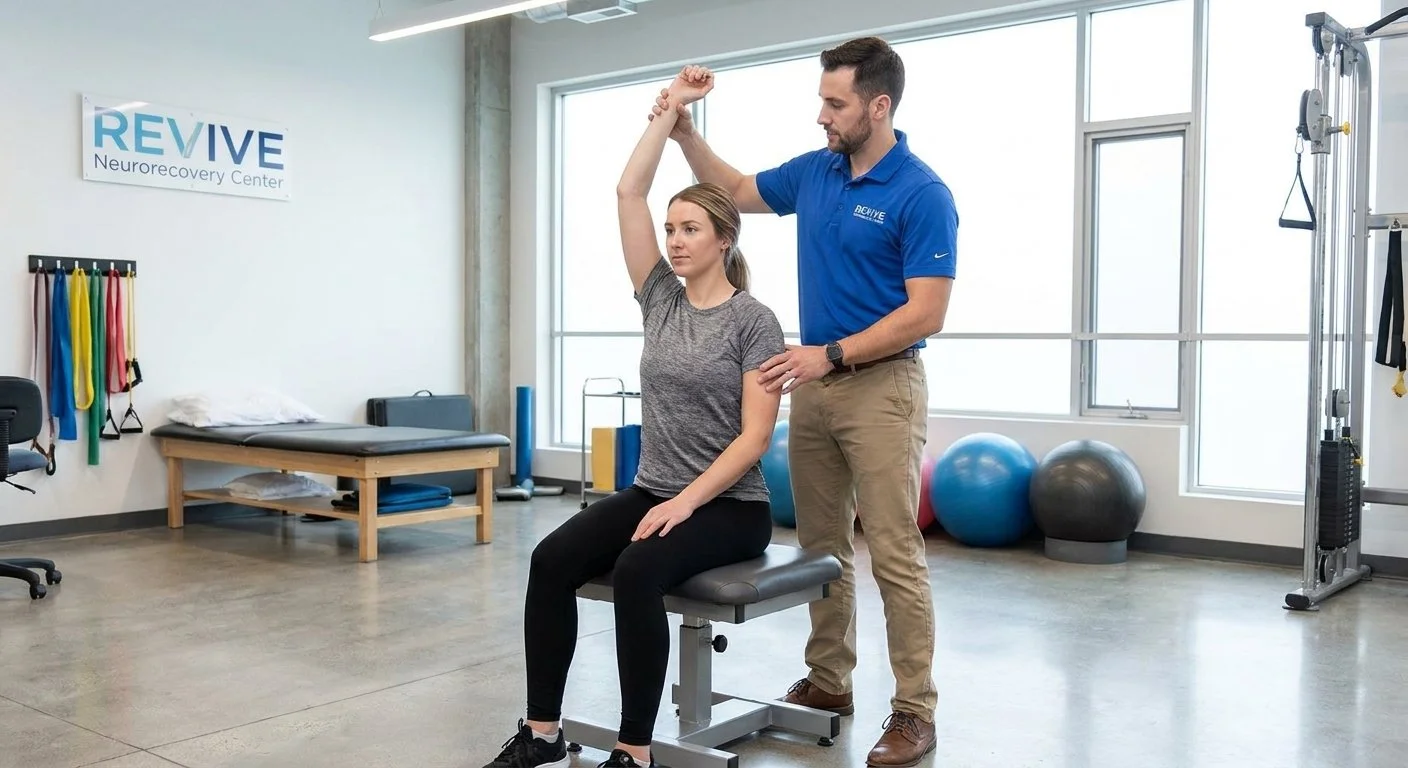
Neurologic physical therapy is a specialized area of rehabilitation focused on conditions that affect the brain, spinal cord, and nerves. Instead of treating only a sore joint or a tight muscle, your therapist looks at how your nervous system is communicating with your body and designs movement challenges to improve that communication.
The nervous system has an ability called neuroplasticity, which means it can reorganize and form new connections in response to experience and practice. Research consistently supports task-specific, repetitive, and challenging practice as a driver of motor recovery after neurological injury. In plain terms, what you practice — and how intensely you practice it — matters.
General physical therapy is excellent for many orthopedic problems. Neurological rehabilitation goes further by addressing issues like:
Impaired motor control and coordination
Weakness on one side of the body or below a level of injury
Balance problems and fall risk
Muscle tone changes, stiffness, and spasticity
Difficulty with walking and mobility training
Fatigue and reduced endurance
Finding a clinic with true neurological expertise is essential. The details of how a session is designed can shape your results.
Who Can Benefit From Neuro Physical Therapy in Charlotte?
If you are an adult living with a neurological condition and you still have goals you have not reached, this type of care is built for you. Revive Neurorecovery Center works with people managing complex conditions, including:
Stroke: Rebuilding strength, movement, balance, and walking after a brain injury from stroke
Spinal cord injury (SCI): Working on trunk control, standing, stepping, and function for both complete and incomplete injuries
Traumatic brain injury (TBI): Improving coordination, balance, and movement patterns
Parkinson's disease: Addressing mobility, posture, balance, and movement confidence
Guillain-Barré Syndrome: Rebuilding strength and function as the body recovers
Amputations: Strengthening, conditioning, and preparing for functional mobility
What If It Has Been Months or Years Since Your Injury?
Many people assume recovery only happens in the first few months. Research on chronic stroke and chronic spinal cord injury has shown that meaningful gains can still occur when training is specific and challenging. Your timeline does not have to define your ceiling.
Every person is different, and no clinic can promise a specific outcome. What a skilled neuro rehab team can do is give you a fair, expert look at what is possible and a plan to pursue it.
Why Does Progress Stall With Traditional Therapy?
Plateaus are real and frustrating. But a plateau on paper does not always mean your body has stopped adapting. Often, it means the structure of your care has reached its edge.
Standard healthcare models tend to limit the type, frequency, and length of therapy. When sessions are capped, the goal shifts toward basic function and discharge rather than pushing toward your highest potential. If you are motivated to walk farther, stand longer, regain hand use, or return to activities you love, "good enough" may not feel good enough.
Common Reasons Recovery Feels Stuck
Sessions are too short or too infrequent to drive lasting change
Time is shared between patients, reducing hands-on guidance
Care ends before meaningful functional goals are reached
Training stays seated or supported rather than challenging the body in upright, weight-bearing positions
Providers are not communicating, leaving the plan feeling disconnected
The good news is that each of these can be addressed with a different approach.
What Makes Revive Neurorecovery Center Different?
Revive Neurorecovery Center was built for people who refuse to settle. The clinic is led by a founder who previously served as the lead outpatient spinal cord therapist at Atrium Health, and the team brings more than 45 combined years of experience treating complex neurological conditions. You can learn more about the people behind the work on the About page.
Every Session Is One-on-One With a Doctor of Physical Therapy or Occupational Therapist
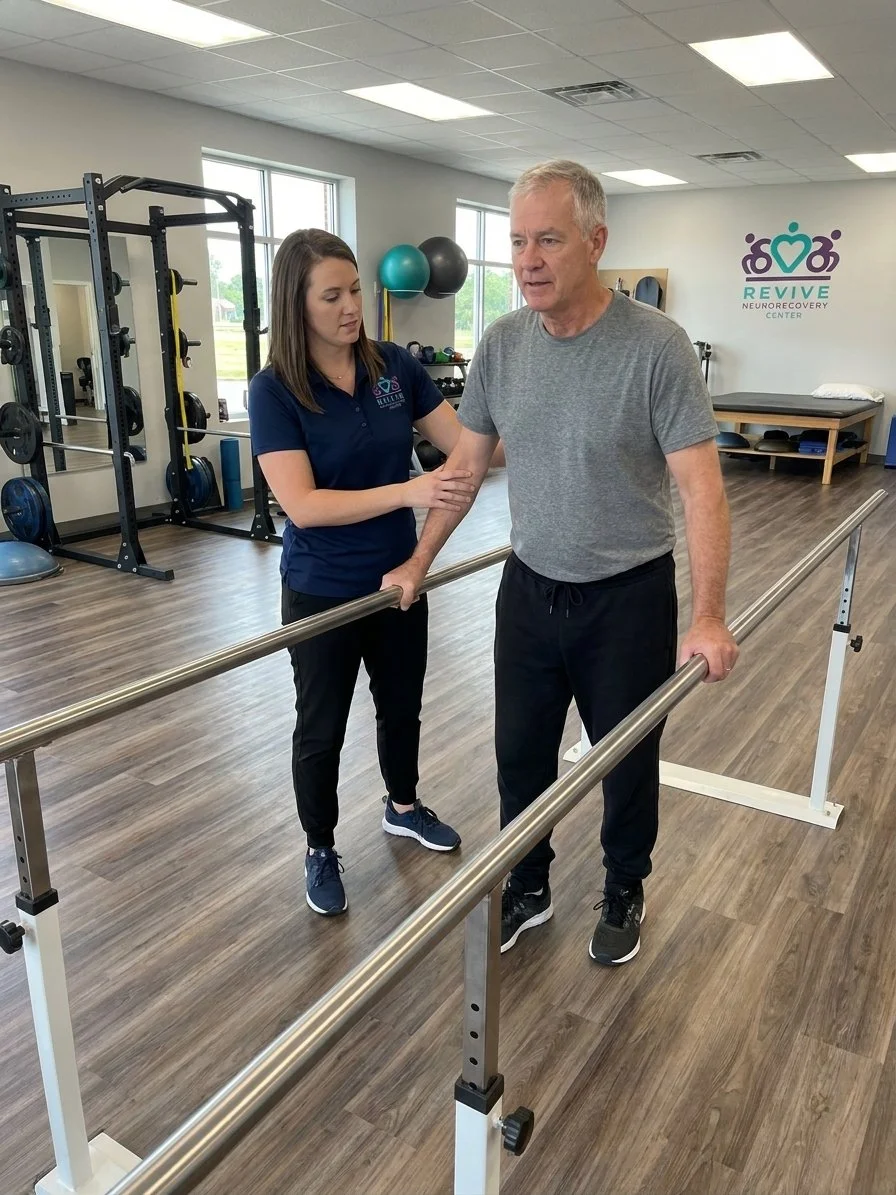
At Revive Neurorecovery Center, you work directly with a Doctor of Physical Therapy or an Occupational Therapist for your entire session — never an aide or assistant. That means the person who understands your condition is the person guiding every rep, every adjustment, and every challenge.
Neurological recovery depends on precision. A small change in positioning, cueing, or support can be the difference between practicing a movement well and reinforcing a compensation.
No Limits on the Type, Frequency, or Duration of Care
Revive Neurorecovery Center operates on a private pay model, which frees your care from outside restrictions. Your plan is shaped by your goals, not by an arbitrary cap on visits. If your recovery calls for more frequent sessions or a different approach, your team can adjust — allowing for the intensity and consistency that neurological rehabilitation often requires.
How Does Activity-Based Therapy Work?
Activity-based therapy (ABT) is a recovery approach that uses repeated, goal-directed activity to stimulate the nervous system, especially below the level of injury or in areas affected by a neurological condition. The idea is to give your body frequent, meaningful practice of the movements you are trying to regain.
Revive Neurorecovery Center integrates ABT techniques into all sessions. Much of the work happens entirely outside the wheelchair, which allows you to challenge your body in positions that matter for function and health.
Functional Electrical Stimulation
Functional electrical stimulation uses small electrical impulses to activate muscles during movement. It can help you practice patterns like pedaling, standing, or stepping while your muscles are cued to participate. It also supports motor re-education when voluntary control is limited.
Treadmill-Based Gait Training
Gait training on a treadmill allows you to practice walking mechanics in a controlled, repeatable setting. Depending on your needs, support can be adjusted so you can focus on stepping, timing, posture, and endurance. Research in neurological populations supports locomotor training as a way to improve walking and mobility training outcomes.
Weight-Bearing Exercise Outside the Wheelchair
Standing and weight-bearing activities load your muscles, bones, and joints in ways seated positions cannot. They challenge balance, trunk control, and strength, and help you practice the postures you use in daily life. Your therapist will tailor the setup and support to your abilities and safety.
What Services and Techniques Support Your Recovery?
Neurological recovery is rarely about one technique. It is about combining the right tools at the right time. Here is how Revive Neurorecovery Center's services work together:
Neurologic Physical Therapy: The foundation of your plan, focused on movement quality, balance, strength, and function
Neuromuscular Re-Education: Retraining the connection between your brain and muscles to improve control and coordination
Therapeutic Exercise: Targeted exercises to build strength, endurance, and mobility
Strength and Conditioning: Progressive training to build the physical capacity you need for daily life and higher-level goals
Performance Training: Advanced programming for those who want to move beyond basic function
Manual Therapy: Hands-on techniques to address stiffness, joint mobility, and soft tissue restrictions
Assisted Stretching: Guided stretching to support flexibility, range of motion, and comfort
Electrical Stimulation (TENS/NMES): TENS may help with pain relief, while NMES helps activate and strengthen muscles
Dry Needling: A technique used to address muscle tightness and trigger points as part of a broader plan
You can see the full list of offerings on the Services page.
Which Goals Can You Work Toward?
Your goals drive your plan. Some of the outcomes Revive Neurorecovery Center's team supports include:
Mobility and Flexibility
Whether you want to transfer more easily, walk with better mechanics, or reduce stiffness that limits movement, mobility work is central. Manual therapy, assisted stretching, and neuromuscular re-education can all play a role.
Strength Building
Weakness is one of the biggest barriers after a neurological event. Therapeutic exercise, strength and conditioning, and electrical stimulation can help you build capacity that carries over into daily tasks.
Balance and Fall Prevention
Falls can derail progress and confidence. Balance training, weight-bearing practice, and strength work help you feel steadier and more prepared for real-world situations.
Return to Sport and Adaptive Fitness
Return to sport is on the table. Revive Neurorecovery Center offers return-to-sport programming and small group adaptive fitness classes for people who want to get back to competition, recreation, or simply the joy of training.
How Does Revive Neurorecovery Center Support You Beyond the Therapy Session?
Recovery does not stop when your session ends. Revive Neurorecovery Center extends support into the community and into the practical details that affect your daily life.
Fit With Friends CLT: Adaptive CrossFit for Everyone
In partnership with CrossFit Mecklenburg, Revive Neurorecovery Center offers Fit with Friends CLT, Charlotte's only all-inclusive adaptive CrossFit class. It is a high-energy, welcoming space where people of different abilities train side by side — a great way to build strength, stay consistent, and find a community that supports your progress.
Wheelchair Seating and Complex Leg Bracing Evaluations
The right equipment can change how well you move and how comfortable you feel. Revive Neurorecovery Center provides comprehensive wheelchair seating and complex leg bracing evaluations in house, so your equipment decisions are connected to your therapy goals.
Coordination With Your Existing Team
You may already have therapists, physicians, or equipment vendors involved in your care. Revive Neurorecovery Center coordinates with your existing therapy team and vendors to support continuity of care, resulting in a plan that feels connected rather than fragmented.
Is Revive Neurorecovery Center Convenient for Charlotte Residents?
Revive Neurorecovery Center is located just outside Charlotte in Fort Mill, SC, and is easily reached from across the Charlotte metro area via I-77. When the care you receive is specialized, one-on-one, and built around your goals, the drive becomes part of your investment in your future.
Ready to Push Past Your Plateau?
You are not done. Your nervous system is still capable of learning, adapting, and surprising you — and you deserve a team that believes in that as much as you do.
Revive Neurorecovery Center is ready to help you chase bigger goals with one-on-one expert care, activity-based therapy, advanced rehabilitation technology, and a community that lifts you up. Visit the Revive Neurorecovery Center home page to get started, or explore more resources on the blog. Contact Revive Neurorecovery Center today and book your appointment to take the next step in your neuro recovery.
