
Unlocking Your Potential: The Advanced Neuro Physical Therapy Difference in Charlotte, NC
Imagine working harder than you ever have in your life — showing up to every therapy session, doing every exercise, pushing through every frustrating plateau — only to be told that your insurance visits have run out and it is time to be discharged. Not because you have fully recovered. Not because you have reached your goals. Simply because the calendar says so.
For many people living with complex neurological conditions, this is not a hypothetical. It is a moment that feels like a door closing. But for those who find their way to Revive Neurorecovery Center in Charlotte, NC, it is often the beginning of a very different chapter.
What Happens After Traditional PT Ends
Traditional outpatient physical therapy serves an important purpose. For many conditions, a defined course of treatment is exactly what is needed. But neurological recovery does not always follow a predictable timeline, and the nervous system does not stop its potential for change simply because a benefits period has ended.
When insurance-based PT concludes, patients with conditions like stroke, spinal cord injury, traumatic brain injury, or Parkinson's disease are often left asking the same question: what now?
Some are told they have plateaued. Others are sent home with a printed exercise sheet and a follow-up appointment months away. Many feel that the progress they worked so hard to achieve is beginning to slip, with no clear path forward.
This gap between where traditional PT ends and where long-term neurological recovery needs to go is exactly what Revive Neurorecovery Center was built to bridge.
What Is Neurologic Physical Therapy and Who Does It Serve
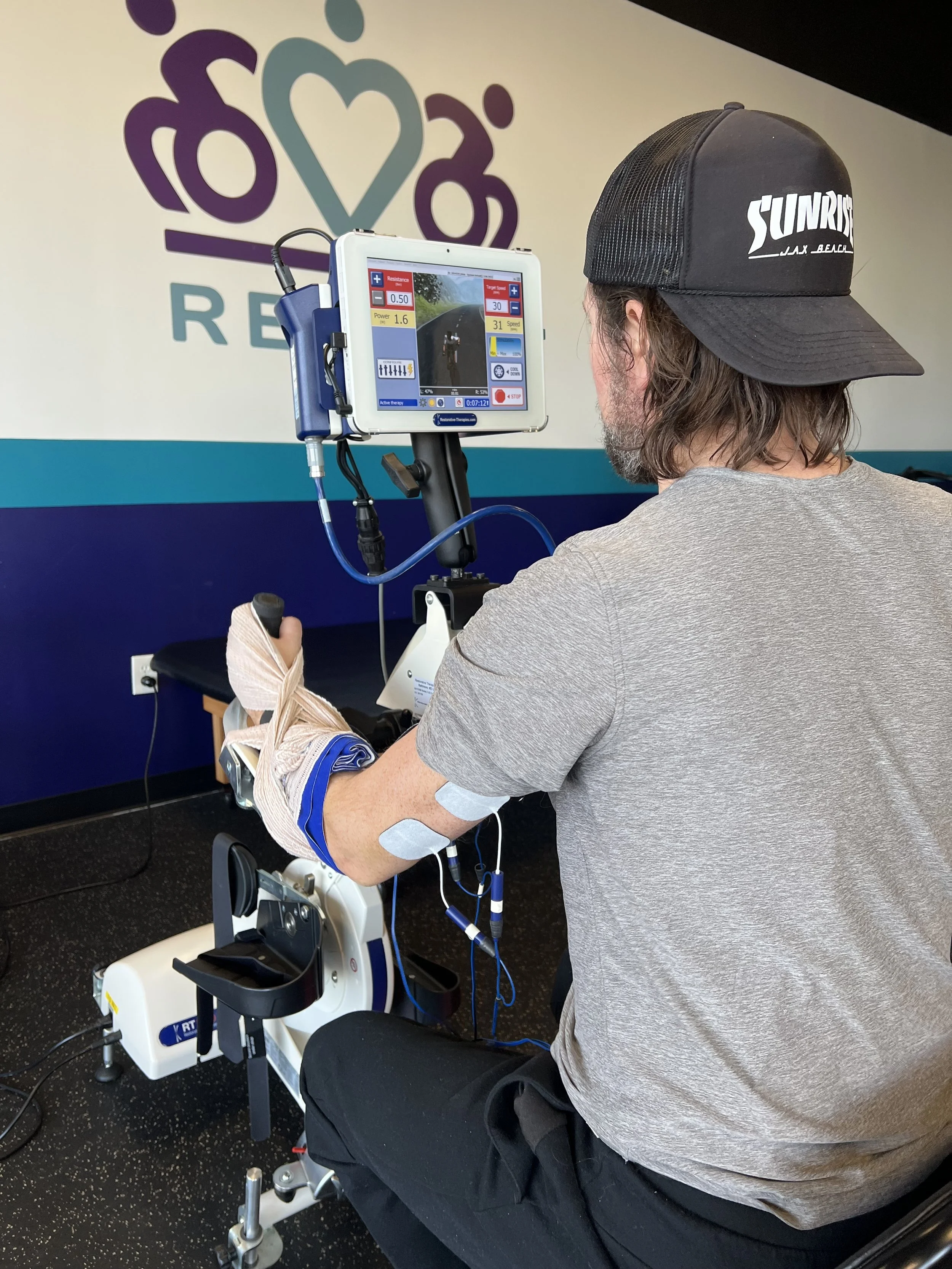
Neurologic physical therapy is a specialized area of care focused on people whose nervous system has been affected by injury or disease. Unlike general orthopedic PT, neuro rehab requires a deep understanding of how the brain, spinal cord, and peripheral nerves control movement, balance, and function — and how to retrain those systems when something has gone wrong.
This type of care is designed for adults living with conditions such as:
Spinal cord injury
Stroke
Parkinson's disease
Traumatic brain injury (TBI)
Guillain-Barré syndrome
Lower-body amputations
The goal is not simply to complete a set of exercises. It is to retrain the nervous system, rebuild functional strength, and restore as much independence as possible — for as long as progress remains possible.
Recognizing When You Need a More Specialized Level of Care
Many people do not realize they need a more advanced level of neurological rehabilitation until they hit a wall in traditional therapy. You may recognize some of these experiences:
You continue to struggle with balance or have experienced recent falls
Everyday tasks like walking, dressing, or transferring still feel difficult
You experience ongoing weakness, spasticity, or numbness
You were told you have plateaued or reached your maximum recovery potential
You were discharged from insurance-based PT but still feel there is more progress to be made
You want to return to a sport, hobby, or active lifestyle but do not know where to start
If any of this sounds familiar, it does not mean your recovery has to stop. It may simply mean you have not yet had access to the right level of specialized care.
Why Generic Outpatient PT Often Falls Short for Complex Neurological Conditions
Most outpatient clinics are built to treat a high volume of patients with musculoskeletal issues — sprains, post-surgical recovery, and similar conditions. Complex neurological conditions require a fundamentally different approach, and the standard outpatient model is rarely equipped to provide it.
Limited One-on-One Time
In many traditional clinics, therapists divide their attention across multiple patients at once, often relying on aides or assistants to carry out portions of a session. For someone working to rebuild neurological function, this is rarely sufficient. Neuroplasticity — the nervous system's ability to form new connections after injury — depends on high-repetition, task-specific practice that requires consistent, skilled guidance.
Session Caps Driven by Coverage Limits
Coverage-based models often place limits on the number of visits allowed, regardless of whether a patient is still making meaningful progress. For someone recovering from a stroke, spinal cord injury, or brain injury, recovery timelines do not fit neatly into a preset number of sessions.
Lack of Specialized Training and Tools
Not every physical therapist has extensive neuro-specific training, and not every clinic has access to the advanced modalities that support neurological recovery. The result is that patients with complex needs are often treated with the same general protocols used for far less involved conditions.
Revive Neurorecovery Center was built specifically to address these gaps.
The Revive Neurorecovery Center Difference
Revive was designed around a single principle: people with complex neurological conditions deserve individualized, expert-level care for as long as they continue to make progress.
Every session is one-on-one with a Doctor of Physical Therapy. There are no aides, no assistants, and no shared time. Your entire session is dedicated to you.
No session caps. Your care plan is driven by your goals and your progress, not by an external checklist.
Neuro-exclusive focus. The entire practice is built around the needs of patients that most outpatient clinics are not equipped to treat.
Deep clinical experience, including team members with backgrounds in spinal cord injury and brain injury rehabilitation.
Convenient access for patients in Charlotte, NC and the surrounding area, including Fort Mill, SC.
Harnessing Neuroplasticity Through Activity-Based Therapy
One of the most important principles in neuro rehab is neuroplasticity — the nervous system's capacity to reorganize, adapt, and form new pathways even after significant injury or disease. This is not a passive process. It requires the right kind of input, delivered consistently and with precision.
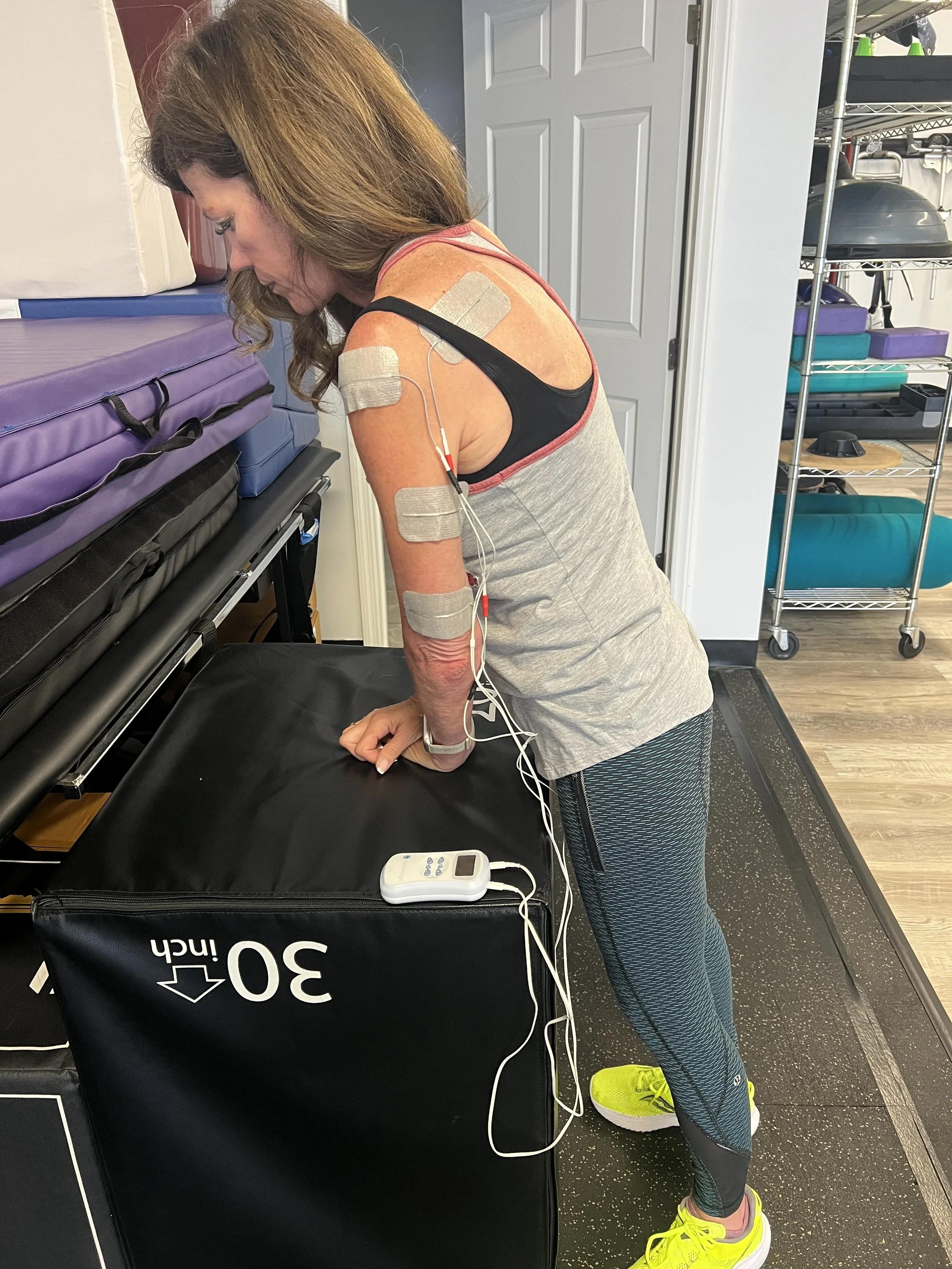
At Revive Neurorecovery Center, activity-based therapy is a cornerstone of the treatment approach. Whenever possible, therapy is performed in weight-bearing positions outside the wheelchair, because upright, active movement provides the nervous system with the most meaningful signals for adaptation.
Treatments That Support Neurological Recovery
Every treatment plan at Revive is individualized, but the following modalities are commonly integrated based on each patient's condition and goals:
Neuromuscular re-education to retrain movement patterns disrupted by neurological injury
Therapeutic exercise to build strength, endurance, and functional capacity
Electrical stimulation (TENS/NMES) to support muscle activation and re-education
Manual therapy to address soft tissue restrictions and support mobility
Assisted stretching to maintain flexibility and reduce tightness that limits movement
Dry needling to manage muscle restrictions that interfere with function
ARC-EX noninvasive spinal cord stimulation, available for appropriate candidates, particularly those with cervical or spinal cord involvement
By combining these treatments with activity-based positioning and gait training, the goal is to give the nervous system the most effective environment possible to adapt and improve.
How Long Does Neurological Recovery Actually Take
This is one of the most common — and most important — questions patients ask. The honest answer is that it depends, and that uncertainty is itself part of what makes neurological recovery so different from other types of rehabilitation.
For conditions like stroke, TBI, or spinal cord injury, the nervous system can continue to demonstrate meaningful change well beyond the initial recovery window that traditional PT typically covers. Research on neuroplasticity consistently shows that the brain and spinal cord retain the capacity for adaptation far longer than was once believed — provided the right conditions are in place.
What that means practically is that progress is not always linear, and it is not always fast. But it is often still possible, even years after an initial injury or diagnosis, when the approach is intensive, individualized, and grounded in the science of how the nervous system learns.
What Ongoing Neuro Rehab Can Look Like
For patients who have already completed a course of traditional PT, continued neurological rehabilitation at Revive might focus on:
Walking and mobility training to improve gait quality, safety, and endurance
Gait training using task-specific, repetitive practice to reinforce functional movement patterns
Balance and fall prevention to reduce risk and build confidence in daily activities
Strength building to address the muscle weakness that commonly accompanies neurological conditions
Mobility and flexibility work to maintain range of motion and support overall function
The specific focus evolves as the patient progresses, always guided by their goals and the clinical picture.
Adaptive Fitness and Life Beyond the Clinic
Recovery does not stop when a therapy session ends. Staying active, connected, and engaged outside of formal rehabilitation is a meaningful part of long-term neurological health — and it is an area where many patients feel unsupported after discharge.
Revive Neurorecovery Center addresses this through adaptive fitness programming designed to help patients stay active and build community. The team proudly offers Fit With Friends CLT, Charlotte's only free, all-inclusive CrossFit class designed for individuals with neurological conditions. This program provides an opportunity to build strength, connect with others on a similar journey, and continue moving toward fitness goals in a supportive, adaptive environment.
Your Next Step Toward Long-Term Neurological Recovery
A plateau does not have to be the end of your story. If you are in Charlotte, NC, or the surrounding area, and you are ready for a therapy experience built entirely around your goals and your potential, Revive Neurorecovery Center is ready to help.
With one-on-one Doctor of Physical Therapy care, no session caps, and a treatment approach grounded in the science of neuroplasticity and activity-based therapy, Revive is committed to helping you keep progressing — for as long as progress is possible.
Reach out today to schedule your free initial discovery call and learn whether Revive Neurorecovery Center is the right fit for your recovery journey. Visit Revive Neurorecovery Center to get started.
